Spellbook Alternative for UK Freelancers: What to Use Instead
 Written by Lóránt Bartha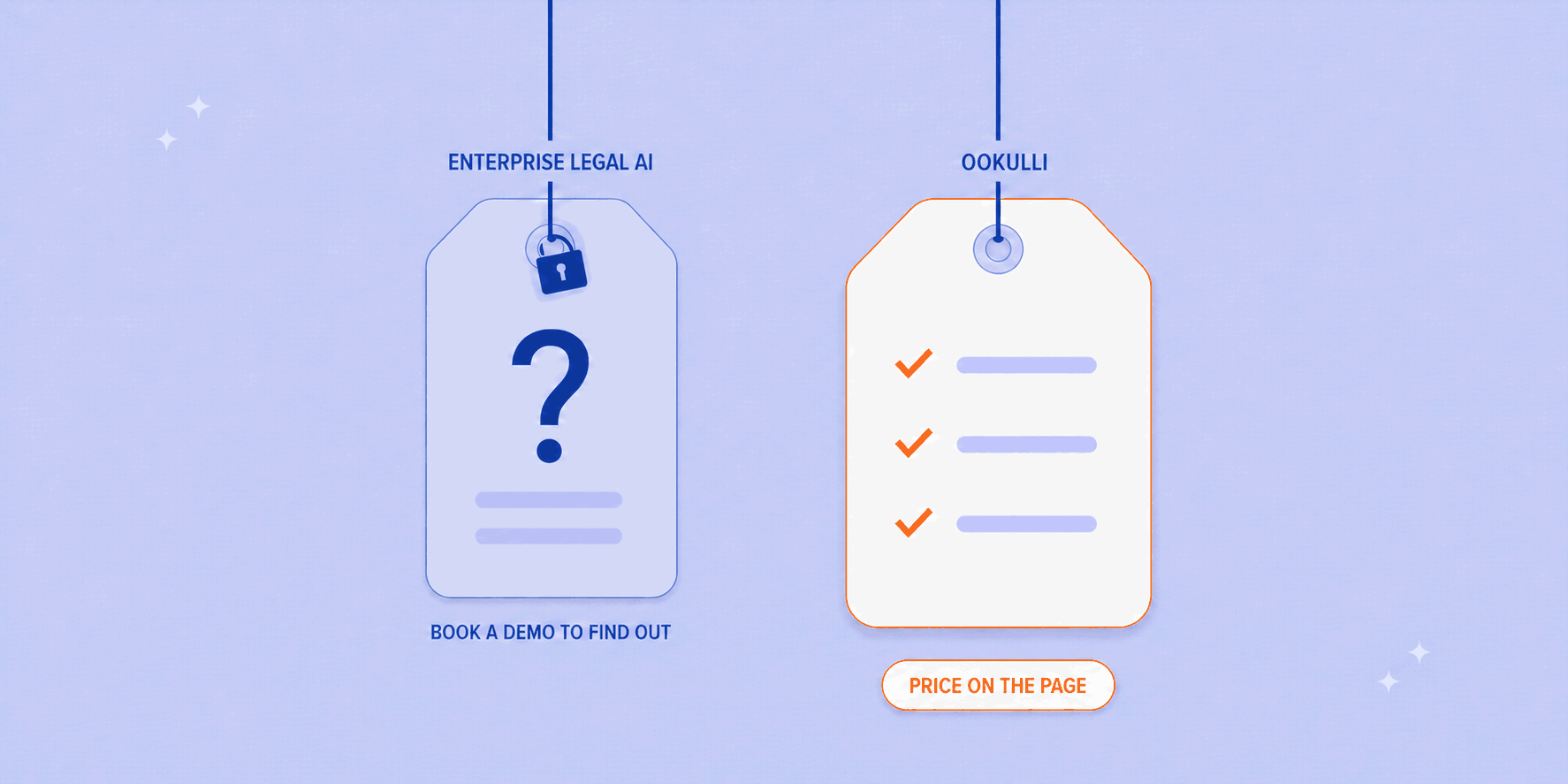
Spellbook is a contract drafting tool built for lawyers inside Microsoft Word. If you're a UK freelancer reviewing a contract you've been sent, it was not designed for you, and this article explains what is.
If you came across Spellbook in a recommendation or a "best AI contract review" listicle, that is completely understandable. It comes up a lot. But those lists are almost always written for in-house legal teams at large companies, not for a freelancer with one service agreement and a deadline. The tool that works for a transactional solicitor redlining a commercial lease is a different tool from the one that helps you understand what you have agreed to before you sign.
This article explains what Spellbook is, who it is genuinely built for, and what a UK freelancer should use instead.
Key Takeaways
Spellbook is an AI contract drafting and negotiation tool that runs inside Microsoft Word, built for lawyers and legal teams, not freelancers reviewing inbound contracts.
Spellbook does not publish pricing. You cannot see a price without booking a demo or contacting sales.
UK freelancers need a different kind of tool: one that reviews a contract you have been sent, applies UK law, and explains risks in plain English without requiring a Microsoft 365 licence.
Ookulli is designed for exactly this: UK-grounded contract review for freelancers, from £10 per document, no subscription, no Microsoft Word required.
If you want to compare multiple tools side by side, our full comparison of AI contract review tools for UK freelancers covers eight options in detail.
What Spellbook actually is (and who it's built for)
Spellbook is a legitimate, well-regarded product. It is trusted by more than 4,500 in-house teams and law firms across 80 countries, and it has processed over 10 million contracts. That is a serious track record, and it is worth being honest about that before explaining why it is not the right Spellbook alternative for most UK freelancers.
Here is what it does: Spellbook is an AI-powered contract drafting, review, and negotiation tool that lives inside Microsoft Word as an add-in. It helps lawyers draft clauses, review inbound agreements, compare terms against market standards, and apply reusable playbooks to contracts their clients are negotiating. It is built for the person sitting across the table from another lawyer, working through a complex commercial deal.
The Microsoft Word dependency matters. Spellbook runs inside Word. If you do not have Microsoft Word, you cannot use it. There is no browser version, no mobile app, no Google Docs integration. For freelancers who work in a browser or across different devices, this is an immediate practical barrier.
Pricing is not published. Spellbook's pricing page shows "Book a demo" and "Contact." There is no self-serve plan, no visible per-document cost, and no monthly price you can read without speaking to their sales team. Reported terms also include a minimum commitment measured in months rather than a rolling plan, which compounds the problem for anyone with a single contract to review. That model makes sense for enterprise legal teams with procurement budgets; it does not suit a freelancer who needs to review one contract this week and wants to know the cost upfront.
The audience is explicit in their own words. Spellbook's homepage refers to lawyers, law firms, in-house counsel, and legal teams. The word "freelancer" does not appear in their marketing as at July 2026. That is not a criticism, it is an accurate description of who the product is for.
Why that matters if you're a UK freelancer
The review job a UK freelancer needs to do is fundamentally different from what Spellbook is designed for.
A transactional lawyer uses Spellbook to draft, redline, and negotiate contracts on behalf of a client. They are the one creating and shaping the agreement. They need tools for bulk clause generation, market standard benchmarking, and back-and-forth negotiation across multiple versions of a document.
You, as a UK freelancer, have received a contract from a client. You need to understand what it says, spot anything that could harm you, know which clauses are unusual or risky under UK law, and decide what, if anything, to push back on. That is a different task. It requires a tool built to analyse an inbound document through the lens of the person signing it, not the person drafting it.
A few practical realities about the freelancer situation that enterprise tools do not address:
- You are reviewing one or two contracts a month at most, not dozens per week
- You do not have a legal team or a legal budget
- You need a straight answer about what a clause means, not a redlining interface designed for lawyers
- You need that answer grounded in UK law specifically, because UK employment and contract law differs meaningfully from US law, and many AI tools are trained primarily on US legal sources
- You need transparent pricing so you can decide before you commit
If you have been pointed to Spellbook as a solution to this problem, the honest answer is that it solves a different problem, and it solves it very well, just not yours.
What to look for in a Spellbook alternative for UK freelancers
Before comparing tools, it helps to be clear about what the right tool for a UK freelancer actually needs to do. This is the criteria list that most "best AI contract review" roundups skip, because they are written for procurement managers, not individuals.
Inbound contract review, not drafting. You have been sent a contract. You need to understand it, not create one. Look for tools designed to analyse documents you have received rather than help you draft documents you are sending.
UK law jurisdiction. This is non-negotiable. Contract law in the UK operates under different frameworks from US law. An AI tool trained predominantly on US legal content can miss things that matter under UK law, or flag things as problems that are perfectly standard here. The tool you use should explicitly cover UK law and cite specific UK statutes when it raises a concern.
Transparent pricing, visible upfront. If you cannot see the price without booking a sales call, the product is not designed for individuals. For occasional freelance use, you need to know the cost before you decide, not after a 30-minute demo.
No enterprise dependency. No Microsoft Word add-in. No requirement for a company email, a team licence, or an enterprise account. A browser-based tool you can use on your own, today, without IT setup.
Shows its working. A good contract review tool does not just say "this clause is risky." It tells you which clause it is referring to, and which specific UK law or principle makes it a concern. That transparency lets you verify the reasoning and make your own decision. For a deeper look at why this matters, see why generic AI gets contract review wrong, it covers the specific ways opaque AI responses can mislead you when reviewing legal documents.
Pay-per-document or low-cost entry. If you review two contracts a month, a monthly subscription is poor value. Pay-as-you-go or low per-document pricing is a much better fit for freelance volumes.
Ookulli: the Spellbook alternative built for the freelancer use case
Ookulli is built specifically for the situation most contract review tools ignore: you are an individual in the UK, you have been sent a contract, and you need to understand it before you sign.
Here is what it covers:
Contract types: service agreements, NDAs, and employment contracts, the documents most UK freelancers encounter regularly.
UK law grounded: every flag Ookulli raises is tied to a specific UK statute or legal principle. You can see which clause triggered the concern and which law it relates to. You are not just told "this is risky"; you are shown why, with a source. This is the transparent, source-cited analysis that generic AI tools do not provide.
Plain English summaries: the output is written for you, not for a solicitor. Legal language is translated into what it actually means for your situation.
Pricing, published on the page: a free basic overview of your contract is available to start. Full analysis starts at £10 per document (100 credits for £10; 300 credits for £25; 500 credits for £40). There is no subscription and no sales call required to see the price. There is also a 30-day money-back guarantee.
Unlimited follow-up chat: once you have reviewed your contract, you can ask follow-up questions about specific clauses or terms. You are not limited to a static report.
No Microsoft Word required: Ookulli is browser-based. You upload your contract, get your analysis, and ask questions, without any add-ins, integrations, or enterprise software.
The contrast with Spellbook's model is structural, not promotional. Spellbook asks you to book a demo before you can see a price; Ookulli publishes it. Spellbook requires Microsoft Word; Ookulli runs in a browser. Spellbook is designed for lawyers drafting contracts; Ookulli is designed for the person on the other side of that process.
Before uploading any contract to an AI tool, it is also worth knowing how to handle sensitive information safely. Our guide on how to anonymise your contract before any AI review explains exactly what to remove and why, whichever tool you end up using.
When Spellbook is actually the right answer
It would not be honest to frame this as "Spellbook is bad." It is not. For the right user, it is excellent.
If you are a solicitor or legal professional who drafts and negotiates commercial contracts inside Microsoft Word, Spellbook is a genuinely powerful tool. The clause generation, market standard comparison, and playbook features are designed for exactly that workflow, and the scale of its adoption, 4,500+ firms, 10 million contracts, reflects that it delivers real value to legal professionals.
If your organisation has an in-house legal team handling a high volume of contracts and needs AI assistance embedded directly into a Word-based workflow, Spellbook fits that brief.
The mismatch is specific: Spellbook is built for the person who writes contracts professionally. It is not built for the person who receives a contract and needs to understand what they are agreeing to. Those are different jobs. Recognising that distinction saves you the frustration of trying to use an enterprise legal tool to solve an individual freelancer problem.
For a wider comparison of tools across both use cases, including Spellbook alongside seven other options, see our full comparison of AI contract review tools for UK freelancers.
Frequently asked questions
Is Spellbook free for freelancers?
Spellbook does not publish pricing. Their website routes all enquiries through either a 7-day trial request or a demo call with their sales team. There is no self-serve free plan, and you cannot see any pricing without contacting them directly. If you need a Spellbook alternative with transparent, upfront pricing, Spellbook's model is not designed for that.
Can I use Spellbook without Microsoft Word?
No. Spellbook is a Word add-in and runs inside Microsoft Word. If you do not use Microsoft Word as part of your workflow, you cannot access Spellbook. There is no browser-based version or alternative interface.
What is the best Spellbook alternative for UK freelancers?
For UK freelancers reviewing contracts they have received, service agreements, NDAs, employment contracts, Ookulli is the most direct fit. It reviews inbound contracts against UK law, flags risky clauses with citations to specific UK statutes, and starts at £10 per document with no subscription. It runs in a browser with no software required.
Does Ookulli work for my type of contract?
Ookulli reviews service agreements, NDAs, and employment contracts. If you are a UK freelancer, those are the three most common documents you will encounter. It is designed for UK jurisdiction and cites UK law in its analysis.
Why do AI tools recommend Spellbook for freelancers if it is not built for them?
Most AI recommendations in this space are trained on content written for the legal industry, where Spellbook is a well-known name. The content gap is that almost no article explains the mismatch from the freelancer's side. Spellbook is prominent in legal circles; the fact that it is designed for lawyers rather than freelancers is rarely stated plainly in those sources.
Is it safe to upload my contract to an AI tool?
It depends on the tool and how you handle sensitive information. For general guidance on what to consider before uploading any contract to an AI platform, see why you should anonymise your contract before any AI review, it walks through exactly what to remove and how to protect your information if you do use AI tools for contract review.
Conclusion
The core decision here is simpler than most articles about AI contract tools make it sound.
Spellbook is built for lawyers who write contracts. It is a serious, well-regarded tool that does that job well. If you are a UK freelancer who has been sent a contract and needs to understand what you are signing, that is a different job, and Spellbook was not designed for it.
The Spellbook alternative you need reviews inbound contracts, applies UK law, flags risky clauses with specific legal citations, and tells you the price before you commit. That is what Ookulli does.
You can start with a free basic overview of your contract, then decide whether you want the full analysis. No sales call. No Microsoft Word. No subscription to cancel.